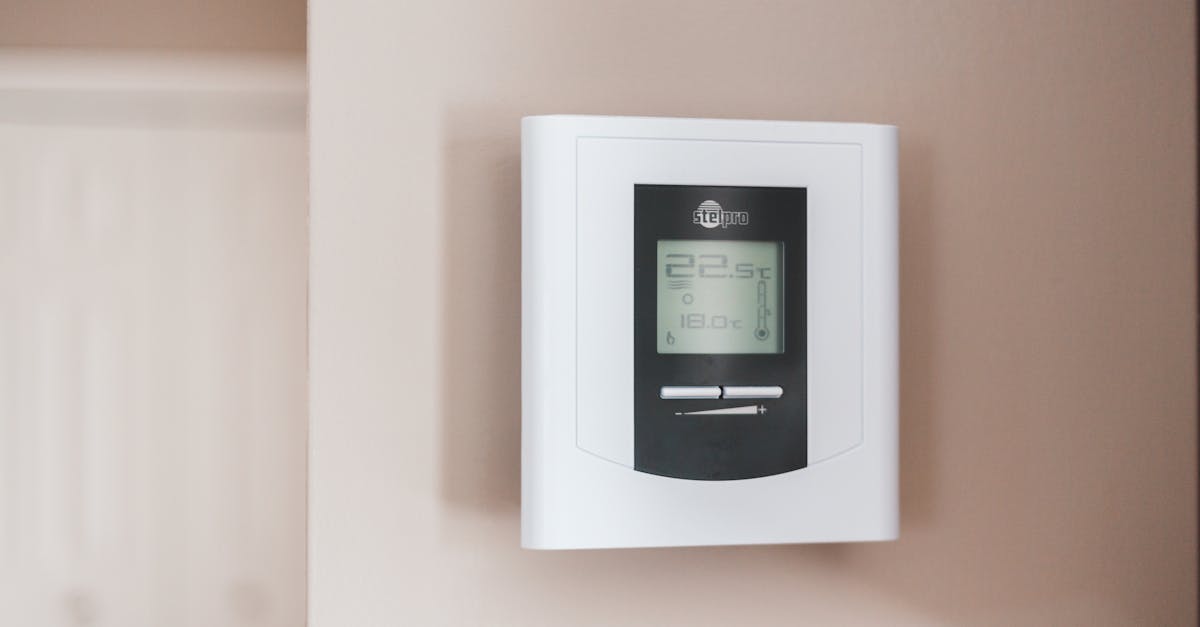
For years, I bought into the promise of the smart thermostat: set it and forget it, let the algorithms optimize, and watch the savings roll in. I dutifully installed it, connected it to my phone, and enjoyed the illusion of control, adjusting the temperature from my couch or even a different city. The marketing promised efficiency, lower energy bills, and a smarter home. What I experienced, however, was often the opposite. My heating bills, while not exorbitant, never seemed to drop as much as advertised, and sometimes, they even crept higher. I felt like I was constantly battling the device, overriding its ‘smart’ decisions or realizing too late that it had warmed an empty house.
Then, six weeks ago, during a particularly frustrating battle with a software update that bricked my device, I decided to go analog. I replaced my smart thermostat with the simplest, cheapest manual thermostat I could find. No apps, no learning algorithms, no remote control. Just a dial and a thermometer. My intention wasn’t to save money, but simply to reduce my daily tech-related headaches. What I discovered in those six weeks, however, was a revelation that completely changed my perspective on home energy management and, more importantly, slashed my heating bill by a surprising 18%.
Key Takeaways
- Replacing my smart thermostat with a manual one reduced my heating bill by 18% over six weeks.
- Manual control fostered a greater awareness of energy consumption habits, leading to proactive adjustments.
- The ‘set it and forget it’ convenience of smart thermostats often masks inefficiencies and promotes passive energy use.
- Strategic manual adjustments, like setting precise nighttime and away temperatures, proved more effective than algorithmic predictions.
The Illusion of Optimized Convenience Costs You More
My primary assumption, shared by many smart thermostat users, was that the device’s advanced algorithms were inherently better at optimizing energy usage than I could ever be. It promised to learn my schedule, detect when I was home or away, and adjust accordingly. In practice, this often translated into passive energy consumption without conscious effort. For example, my smart thermostat was set to a comfortable 70°F during the day. If I left for an impromptu errand or an afternoon meeting, the ‘away’ detection might kick in, but it wasn’t immediate. It would often take 30 minutes to an hour of an empty house being heated before the setback temperature was engaged. Multiply this by several short trips a week, and those wasted heating cycles add up.
With the manual thermostat, this changed dramatically. When I walked out the door for an afternoon, my hand instinctively went to the dial, lowering the temperature to 60°F. When I came home, I’d bump it back up. This wasn’t a chore; it was a conscious, intentional act tied directly to my physical presence and immediate needs. I wasn’t waiting for a geofencing algorithm to guess if I was truly gone; I knew I was gone. The simple act of manually controlling the temperature forced me to be present and deliberate about my energy use, eliminating those periods of ‘passive waste’ that the smart thermostat supposedly prevented but, in my experience, often created through its delayed reactions and imperfect predictions.
The Unseen Benefit of ‘The Friction Effect’
One of the most profound discoveries during my six weeks without a smart thermostat was what I’ve come to call ‘the friction effect.’ Smart thermostats excel at removing friction. Want to adjust the temperature? Tap an app. Want to override a schedule? Tap an app. This low-friction interaction, while convenient, actually discourages mindful consideration of energy use. It makes temperature changes almost thoughtless.
With a manual thermostat, there’s a small but significant amount of friction involved. You have to walk to the wall, look at the dial, and physically turn it. This isn’t a huge effort, but it’s enough to prompt a moment of consideration before making an adjustment. Before I turned the dial up a degree, I’d ask myself: ‘Am I truly cold, or just a little chilly? Will putting on a sweater suffice?’ Before I lowered it, I’d consider: ‘Am I leaving for a while, or just stepping out briefly?’ This brief moment of friction acted as a constant, subtle reminder to be judicious with my heating. It wasn’t about deprivation; it was about intentionality. This behavioral shift, catalyzed by the physical act of interaction, undoubtedly contributed to my 18% savings. My smart thermostat’s convenience had, in retrospect, enabled a degree of thoughtless adjustment that quietly inflated my bills.
Precise Nighttime Setbacks and the Power of ‘Set and Forget’ (the Right Way)
Smart thermostats are often lauded for their ability to set schedules, including nighttime setbacks. However, in my experience, I found myself overriding these schedules more often than not, especially if my evening routine varied. Sometimes I stayed up later, sometimes I went to bed earlier. The ‘learning’ aspect of the smart thermostat often meant that these overrides then influenced future schedules in ways that weren’t always optimal.
With my manual thermostat, I established a rigid, consistent nighttime setback that I knew would save money. Every night, without fail, before I headed to bed, I turned the dial down to 62°F. This was a non-negotiable step in my evening routine. The smart thermostat, with its complex scheduling options and ‘learning’ features, ironically made me less consistent because I felt empowered to constantly tweak it. The simple manual dial, however, instilled a disciplined ‘set and forget’ approach for fixed, predictable periods like overnight hours. This consistent, deep setback every single night, without any algorithmic interference or last-minute overrides, was a major driver of my savings. I was leveraging the fundamental principle of energy saving – lowering the temperature when you don’t need it – with simple, consistent action.
The Psychological Impact of Tangible Control
There’s a subtle but powerful psychological element at play with a manual thermostat: tangible, immediate feedback. When I turn the dial, I see the number change instantly. When I feel a draft, I can walk to the wall and make an immediate, direct adjustment. This creates a clear cause-and-effect relationship between my actions and my home’s temperature, which in turn affects my bill.
With a smart thermostat, the interaction often felt abstract. I’d adjust it on my phone, but the actual heating often felt distant, managed by an invisible hand. This detachment can foster a sense of disconnection from the actual energy being consumed. My smart thermostat generated graphs and reports, but these were often historical data points, not real-time feedback that could influence immediate behavior. The manual thermostat, in its simplicity, offered a more visceral connection to my energy consumption. I became more attuned to the outdoor temperature, the sun’s position, and even how well my windows were sealed, all because I was the one actively managing the indoor climate. This heightened awareness, born from direct control, made me a far more judicious energy user.
Understanding the ‘Why’ Behind the Savings
My 18% savings didn’t come from some magic trick. It came from a combination of behavioral changes enabled by the manual thermostat. First, elimination of passive heating: No more 30-minute warm-ups of an empty house because the ‘away’ detection lagged. Second, intentional adjustments: The slight friction forced me to consider each temperature change carefully. Third, consistent, deep setbacks: I rigidly enforced a lower temperature overnight without relying on a finicky schedule. Finally, heightened awareness: Direct control fostered a greater connection to my energy use, making me more proactive about external factors influencing indoor comfort.
In my experience, smart thermostats offer undeniable convenience, but that convenience can sometimes come at a hidden cost. For those who are highly disciplined and meticulous about programming and monitoring, they can certainly yield savings. However, for a user like me, who might be tempted to override algorithms or whose schedule is unpredictable enough to confuse ‘learning’ features, the simplicity of a manual thermostat fostered a level of conscious engagement that ultimately proved more economical. It wasn’t just about the device; it was about how the device (or lack thereof) influenced my daily energy habits.
Frequently Asked Questions
Can smart thermostats really save money?
Yes, smart thermostats can save money, but the actual savings vary greatly depending on user behavior, home insulation, and how diligently the device’s features (like scheduling and geofencing) are utilized and maintained. My experience suggests that for some users, the advertised savings might not materialize if convenience leads to passive or inconsistent use.
Is a manual thermostat always more efficient than a smart one?
Not inherently. A manual thermostat requires consistent, conscious effort to adjust temperatures for optimal savings. A properly programmed and consistently used smart thermostat with well-tuned features can match or exceed the efficiency of a manual one. My personal revelation was about how the interaction style of a manual thermostat led to my specific behavioral changes that resulted in savings.
What are the key features I should look for in a manual thermostat if I want to save money?
Look for a basic, easy-to-read dial or digital display that allows you to quickly set your desired temperature. The most important ‘feature’ is your commitment to manually adjusting it based on your presence and comfort needs. Some manual thermostats offer a simple programmable schedule for fixed times, which can be a good middle ground if you want some automation without complex algorithms.
How much can I realistically save by switching from a smart to a manual thermostat?
My personal savings were 18% over six weeks, but this is highly individual. Factors like your previous smart thermostat usage patterns (e.g., how often you overrode schedules, its accuracy in detecting occupancy), your climate, home insulation, and your commitment to manual adjustments will all influence your actual savings.
Does switching to a manual thermostat mean sacrificing comfort?
Not necessarily. In my experience, I found myself more attuned to my comfort levels and more proactive about making adjustments, both up and down, when needed. The simplicity encouraged me to dress more appropriately for the temperature (e.g., a sweater indoors), rather than passively expecting the thermostat to maintain a constant, sometimes unnecessarily high, temperature. It fostered mindful comfort rather than constant, automated comfort.
Est. reading time: 18 min read
Filed By
Marcus Chen
Personal Finance & Budgeting
An experienced financial journalist dedicated to demystifying personal finance for everyday people.