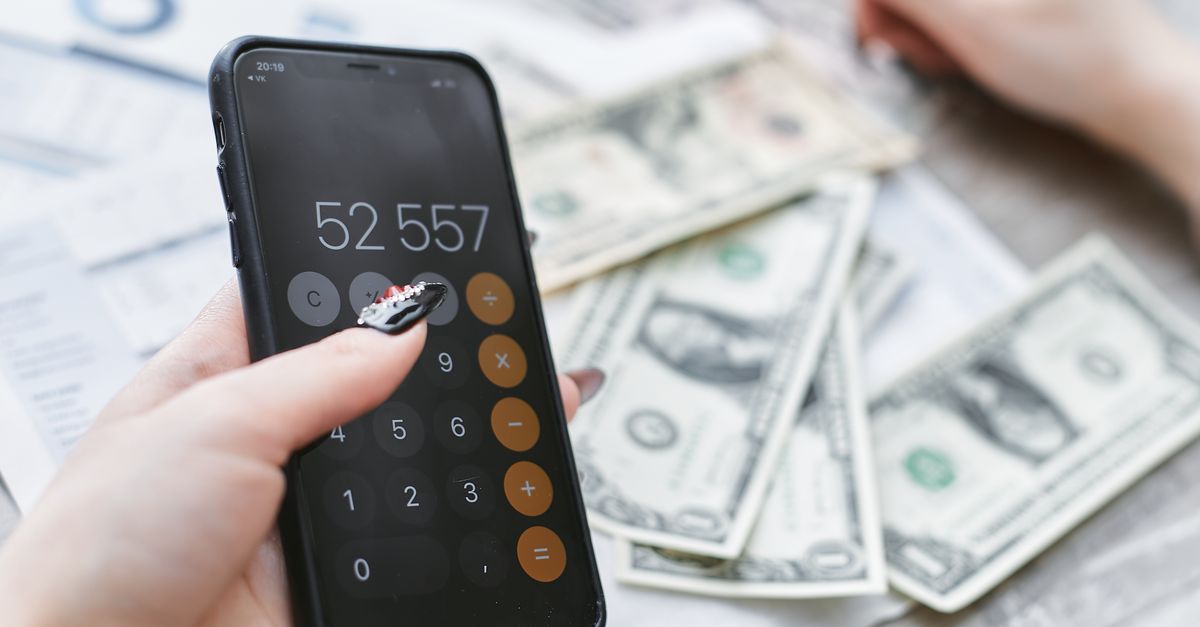
You’ve downloaded the app. Maybe it was Mint, YNAB, or one of the newer players promising financial enlightenment. You dutifully linked your bank accounts, watched the transactions flow in, and for a glorious week or two, you felt like a financial wizard. Then, slowly, the magic faded. The notifications became nagging reminders, the categories felt arbitrary, and soon, you were just another ghost user in the app’s analytics. Your spending habits hadn’t fundamentally changed, and that elusive feeling of being ‘in control’ of your money was still just out of reach. Sound familiar?
In my ten years helping individuals get a grip on their finances, I’ve seen this cycle play out hundreds of times. People believe the tool is the solution, but budgeting apps, for all their bells and whistles, often miss the mark on the why and how of effective money management. They’re excellent at tracking but frequently fall short in fostering the behavioral change and forward-looking strategy that truly transforms your financial life. This isn’t an indictment of the apps themselves – many are technically brilliant. It’s a critique of how we approach budgeting and the common misconceptions about what these tools can, and cannot, do for us.
The real secret isn’t in finding the ‘perfect’ app; it’s in understanding your financial psychology, setting realistic expectations, and adopting a system that empowers you to make proactive decisions, not just react to past spending. What changed everything for me and for countless clients wasn’t a new piece of software, but a fundamental shift in perspective and a commitment to a few core principles that I’ll share with you.
Key Takeaways
- Most budgeting apps excel at tracking but often fail to drive the necessary behavioral change for long-term financial control.
- True budgeting success stems from a proactive, forward-looking strategy that aligns spending with values, rather than just categorizing past expenses.
- Implement a ‘reverse budget’ by automating savings and investments first, treating discretionary spending as what’s left over.
- Focus on a few high-impact spending categories that truly matter to you, rather than meticulously tracking every single penny.
The Illusion of ‘Set It and Forget It’ Financial Control
The biggest promise of many budgeting apps is automation: link your accounts, and poof, your budget builds itself. Transactions are auto-categorized, charts appear, and you get a tidy summary of where your money went. The problem? This creates an illusion of control without requiring actual engagement. While convenient, it encourages a reactive approach. You’re looking at what you did spend, not strategically planning what you will spend. This is akin to driving by constantly looking in your rearview mirror. You can see where you’ve been, but it doesn’t help you navigate the road ahead or avoid that pothole coming up.
In my experience, true financial control comes from deliberate decision-making. When an app automatically categorizes your $6 morning coffee, it removes the moment of conscious consideration. Was that coffee a necessary start to a long day, or a mindless habit? This isn’t about guilt-tripping; it’s about awareness. The power isn’t in seeing ‘Coffee: $6’ on a report; it’s in asking, ‘Do I want to allocate $6 of my hard-earned money to this right now, or could that $6 be better used elsewhere, like saving for a weekend trip?’ The apps abstract away this critical moment of choice, turning budgeting into a passive audit rather than an active plan. What makes a budget stick is the conscious allocation of your resources, and most apps, by trying to make things too easy, actually undermine this essential process.
Why Granular Tracking Becomes Overwhelming and Unsustainable
Many apps encourage, or even demand, meticulous tracking of every single transaction. Every latte, every gas fill-up, every subscription fee. In theory, this provides ultimate clarity. In practice, it often leads to burnout and abandonment. When you have dozens, if not hundreds, of transactions each month, the act of reviewing, adjusting, and sometimes manually categorizing them becomes a chore. It feels like a second job, and frankly, it often doesn’t provide proportional value for the effort.
Consider this: knowing you spent $12.37 on a specific lunch versus $14.50 on another lunch tells you very little about your overall financial health or areas for improvement. What’s far more impactful is understanding that you spent $450 on ‘dining out’ this month, significantly exceeding your $200 target. The minute details often obscure the bigger picture. My clients who succeed with budgeting focus on a few high-impact areas, not every single penny. They might track their ‘fun money’ very closely, but let their rent or utility payments be a fixed, non-negotiable line item that doesn’t require daily oversight.
The human brain is not wired for such tedious, repetitive micro-management. We thrive on patterns, high-level understanding, and actionable insights. When budgeting becomes an exercise in data entry rather than strategic planning, people inevitably disengage. The mistake I see most often is that people try to make their budget reflect every past expense, rather than using it as a forward-looking tool to guide future choices. This is why a simpler, more strategic approach, even if it feels less ‘precise’ at first, often yields far better long-term results.
The Power of a ‘Reverse Budget’: Paying Yourself First (Automatically)
Forget the traditional budgeting advice that tells you to track every dollar and then see what’s left for savings. That approach consistently fails because savings become an afterthought – a nice-to-have if you’ve been ‘good.’ The most effective budgeting strategy, what I call the ‘reverse budget,’ flips this on its head: automate your savings and investments first, before you see the money. This isn’t just a suggestion; it’s the single most impactful change you can make.
Here’s how it works: When your paycheck lands, set up automatic transfers to your savings account, investment accounts (401k, Roth IRA, brokerage), and any debt repayment beyond the minimums. Make these transfers happen the day after your paycheck hits. Treat these contributions as non-negotiable expenses, just like your rent or mortgage. What’s left over in your checking account is your actual budget for everything else – bills, groceries, discretionary spending. This approach completely reframes your relationship with your money. Instead of trying to save, you are saving, effortlessly.
For example, if you earn $4,000 per month after taxes:
- $500 automatically transfers to your emergency fund.
- $300 automatically transfers to your investment account.
- $200 automatically transfers to a specific savings goal (e.g., down payment, vacation).
Now, you have $3,000 left for all your other expenses. This isn’t restrictive; it’s liberating. You know that no matter what, your financial future is being built, and the money remaining is genuinely available for your lifestyle choices. This method bypasses the need for constant app interaction for your most important financial goals and makes budgeting about allocation rather than restriction.
Focusing on Your ‘Big Three’ Expenses (and Ignoring the Noise)
Many budgeting apps present a pie chart with dozens of categories, suggesting you need to optimize every slice. This is rarely true. For most people, the vast majority of their income is consumed by just a few key categories. I call these the ‘Big Three’: housing, transportation, and food. These typically account for 50-70% or more of an average person’s monthly spending. If you can get these three categories under control, you’ve won half the battle – probably more.
Instead of stressing over whether your streaming service is $12 or $15, focus intensely on these high-impact areas. Can you reduce your housing costs by living somewhere more affordable or getting a roommate? Can you lower your transportation expenses by carpooling, using public transit, or refinancing your car loan? Can you significantly cut down on your food budget by meal prepping, cooking at home more often, and reducing restaurant visits?
What changed everything for me and my clients was realizing that a 10% reduction in housing costs (e.g., $150 off a $1,500 rent) is far more impactful and sustainable than trying to shave $5 here and $10 there from minor categories. Once your ‘Big Three’ are optimized to align with your financial goals, the remaining ‘fun money’ becomes much easier to manage. You can use a simpler system, even pen and paper or a basic spreadsheet, to track this smaller, discretionary portion, rather than relying on a complex app for everything. This targeted approach allows you to achieve significant savings with less effort and mental overhead.
Integrating Budgeting with Your Values and Goals
One of the most profound reasons budgeting apps often fail is that they treat money as a purely numerical exercise, detached from personal values and life goals. A budget is not just a ledger; it’s a reflection of your priorities. If your budget doesn’t align with what truly matters to you, it will always feel like a restrictive punishment rather than an empowering tool.
Before you even think about an app, sit down and identify your top 3-5 financial goals. Are you saving for a down payment on a house in three years? Planning a dream vacation next year? Building an emergency fund of six months’ expenses? Once you have these goals, assign a specific dollar amount and timeline to each. Then, look at your spending through that lens. Every dollar you spend on something not aligned with your goals is a dollar not going towards what truly matters.
For example, if your goal is to save $15,000 for a down payment in 18 months, that’s roughly $833 per month you need to set aside. When you’re faced with a choice – an impulse purchase for $100 or putting that $100 towards your down payment – the decision becomes clearer. The app can show you where the $100 went, but it can’t provide that internal motivation. That connection to a personal value or goal is what sustains a budget through tough times and prevents ‘budget fatigue.’ Your budget should be a roadmap to your desired future, not just a historical record of your past transactions. Make your money work for your life, not the other way around.
The Role of Simplicity and Manual Engagement
While automation has its place (especially for savings, as discussed), too much automation in day-to-day budgeting can be detrimental. Paradoxically, a little manual engagement can significantly improve your financial awareness and control. This doesn’t mean becoming a human calculator, but it does mean having a clear, simple system that you interact with regularly.
Many successful budgeters I know use very simple tools: a spreadsheet, a whiteboard, or even the ‘envelope system’ (digital or physical). The common thread is that they actively engage with their money. They might review their spending for specific categories once a week, manually update balances, or decide on their ‘allowance’ for the upcoming week.
For instance, the ‘zero-based budget’ approach, popularized by YNAB (You Need A Budget), works not because of the software itself, but because it forces you to assign every dollar a job. This requires manual input and decision-making for every income dollar, which builds incredible awareness. Even if you don’t use YNAB, adopting its core principle – giving every dollar a purpose before you spend it – is a game-changer. This intentionality, rather than the automation of transaction logging, is where the real power lies. A simple system that you actually use consistently will always outperform a complex app that you abandon after a month.
Frequently Asked Questions
Q: Are all budgeting apps useless then?
A: Not at all. Budgeting apps are excellent tools for tracking past spending, visualizing financial data, and sometimes for setting basic savings goals. Their utility often falls short, however, when it comes to fostering proactive financial planning, behavioral change, and alignment with personal values. Think of them as sophisticated calculators, not financial coaches. They can show you where you’ve been, but you still need to decide where you’re going.
Q: What’s the best budgeting app if I still want to use one?
A: The ‘best’ app is the one you’ll actually use consistently. If you need a high level of detail and are willing to commit to regular input, YNAB (You Need A Budget) is highly recommended because it forces a proactive, ‘every dollar has a job’ approach. For simpler tracking and aggregation, apps like Mint or Personal Capital can provide a useful overview. However, remember that the tool is secondary to your strategy and commitment.
Q: How often should I review my budget?
A: This varies by individual, but for true engagement and effectiveness, I recommend a quick review 1-2 times per week to check in on spending categories, and a more comprehensive review once a month. The weekly check-ins help you make minor course corrections before things get off track, while the monthly review allows you to assess overall progress towards your larger financial goals and adjust your allocations as needed.
Q: What if I have irregular income? How do I budget?
A: Irregular income requires a slightly different approach, but the core principles still apply. Focus heavily on building a solid emergency fund first. Then, use the ‘reverse budget’ concept: when you get paid, immediately allocate money to savings, investments, and fixed expenses. For your variable expenses, create a ‘buffer’ checking account or use an app like YNAB that excels at handling variable income by letting you allocate funds as they arrive.
Q: Is a spreadsheet better than an app?
A: For many, yes. A spreadsheet (or even a notebook) forces manual engagement and provides complete customization. You build the categories, set the rules, and physically input the data, which creates a stronger connection to your money. While apps offer convenience, a spreadsheet offers deeper understanding and flexibility without the distractions or predefined structures that can hinder personal financial planning.
True financial control isn’t about finding the perfect app; it’s about cultivating a mindset of intentionality and aligning your spending with your deepest values and goals. By automating your savings first, focusing on your major expenses, and engaging proactively with a simple, sustainable system, you’ll move beyond just tracking numbers to actually shaping your financial future. Start today by setting up those automatic transfers and identifying your ‘Big Three’ expenses. The power to transform your financial life is already within you, waiting to be unleashed.
Est. reading time: 18 min read
Filed By
Marcus Chen
Personal Finance & Budgeting
An experienced financial journalist dedicated to demystifying personal finance for everyday people.